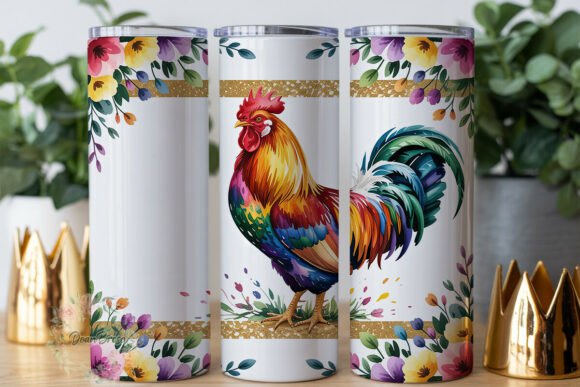
Review: Watercolor Rooster Glitter 20oz Tumbler Design
As a designer who spends more time staring at stitch maps than most people care to admit, I approach every new digital embroidery file with a mix of excitement and skepticism. We have all been there: you buy a stunning graphic online, only to realize once it is on the machine that the details are too fine for the thread, or the density is going to turn your fabric into cardboard. Today, I am taking a close look at the Watercolor Rooster Glitter 20oz Tumbler design. While this asset is marketed primarily under Tumbler Wraps and Graphics, my interest lies in its potential translation from a high-resolution PNG into a tangible, stitched handmade product.
The first thing that strikes me about this design is its mood. The "watercolor" aesthetic suggests soft edges, blending colors, and a painterly feel, while the "glitter" element implies a need for sparkle and texture. In the world of sublimation, this is straightforward. However, for us embroidery enthusiasts, this combination presents a fascinating challenge. How do we replicate the fluidity of watercolor and the shimmer of glitter using thread? This review breaks down how I would tackle this embroidery project if I were preparing it for a client or my own small shop.
Visual Personality and Project Fit
The layout of the Watercolor Rooster Glitter 20oz Tumbler is bold. With dimensions listed around 9.3″ x 8.2″, this is a large-scale graphic. In an embroidery context, you likely won't be stitching this entire block as one solid fill unless you have a massive frame. Instead, I see this working beautifully as a statement piece on a heavy canvas tote bag design or the back of a denim jacket. The rooster motif itself carries a rustic, farmhouse charm that pairs exceptionally well with the modern twist of a glitter effect.
Imagine a scenario where a customer approaches you for a custom gift for a teacher who loves gardening and morning coffee. They want something unique, not just a generic mug. Taking the core elements of this rooster design and adapting them for a kitchen towel or an apron could be a winner. The watercolor style allows for a softer, less rigid look than traditional vector art, which often feels too harsh on textured fabrics like linen or waffle weave. If you can successfully digitize or adapt this PNG into an applique design or a mixed-media stitch, the resulting finished product would have a high perceived value.
Translating Graphics to Stitch
Here is the critical part for any Etsy seller or craft business owner: the source file is a PNG. This means it is a raster image, not a pre-made machine embroidery design with defined stitch types. To use this for embroidery, you must digitize it or use auto-digitizing software with extreme caution. The "glitter" aspect described in the title cannot be achieved with standard thread alone. In a real-world application, I would recommend using a metallic thread for the outlines or specific highlights to mimic that sparkle. Alternatively, this design screams for a hybrid approach: sublimate the watercolor background onto the fabric and then embroider the rooster's outline and key features over it using a satin stitch or detailed running stitch.
If you attempt to stitch the entire watercolor gradient using fill stitch techniques, be wary of stitch density. High-density areas can cause puckering, especially on stretchy fabrics. For a project like a sweatshirt embroidery job, you would need a robust cut-away stabilizer to support the weight of the thread. The visual appeal of the final piece depends entirely on how well you manage the transition between color blocks. In embroidery, we don't have the infinite gradient of print; we have distinct thread colors. You will need to carefully select your thread colors to create the illusion of blending without creating a muddy mess.
Navigating Fabric and Hoop Challenges
One of the biggest hurdles with a design of this magnitude is the hoop size. Most home machines max out at 5x7 or 6x10 inches. Since this graphic is nearly 9 inches wide, you would need to split the design or use a multi-position hoop strategy if your machine supports it. For smaller applications, like a baby embroidery project on a onesie or a pocket on a cap, you would need to isolate just the rooster's head or a single feather detail. Trying to force the full 9.3-inch width onto a small item will look disproportionate and overwhelm the garment.
Texture is another factor. The watercolor style relies on smooth transitions. If you stitch this onto a highly textured fabric like a bouclé sweater or a rough burlap sack, those subtle details will get lost. This design shines best on smooth, tightly woven fabrics like cotton twill, broadcloth, or high-quality polyester blends often used in custom apparel. If you are making an embroidered patch, this is an ideal candidate. You can hoop a stable backing, stitch the design with a merrowed edge, and then apply it to various surfaces, bypassing the limitations of the base garment's fabric.
Commercial Viability and Customer Trust
For those running a small shop product line, consistency is key. If you sell this as a personalized item, your customers expect durability. A common pitfall with large, dense designs is that they become stiff and uncomfortable. If this ends up on a pillow cover or a wall hanging, stiffness is less of an issue. However, for wearable items like a holiday embroidery sweater or a daily-use tote, the hand of the fabric matters. I always advise testing the design on scrap fabric first. Wash it three times. Does the metallic thread tarnish? Do the edges fray? These practical tests build customer trust and protect your brand reputation.
Furthermore, consider the licensing. The product description notes that the download includes PNG files for straight and tapered tumblers and mentions no watermark. It does not explicitly state the license terms for commercial embroidery use. Before listing this as a printable mockup or selling physical goods made from it, you must confirm the creator's terms. Can you sell the digitized version? Can you sell the stitched item? Clarity here prevents legal headaches down the road.
Final Designer Notes for Execution
To get the most out of the Watercolor Rooster Glitter 20oz Tumbler graphic for embroidery purposes, keep these practical steps in mind:
- Test on Scraps: Never run a large, complex design on your final product without a trial run to check registration and tension.
- Check Contrast: Ensure your chosen thread colors pop against the fabric. A dark navy rooster on a black sweatshirt will vanish.
- Stabilizer Selection: Use a heavy-duty stabilizer for large fill areas to prevent distortion during washing.
- Simplify Details: When digitizing, you may need to simplify tiny watercolor splashes into manageable stitch shapes to avoid thread breaks.
- Mockup Verification: Create a black-and-white mockup of your stitch plan to ensure the contrast holds up without color reliance.
In conclusion, while the Watercolor Rooster Glitter 20oz Tumbler starts as a sublimation graphic, its artistic merit offers rich potential for the creative embroiderer willing to put in the digitization work. It fits perfectly into the current trend of whimsical, rustic-modern decor. Whether you are creating a boutique commercial embroidery piece for a local cafe or a personalized gift for a friend, this design encourages you to think beyond the hoop and explore mixed media techniques. Just remember, the magic isn't in the file itself, but in how skillfully you translate those pixels into thread.