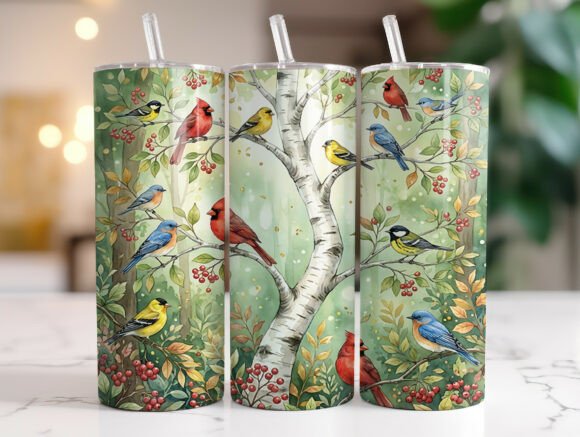
Spring Birds 20oz Tumbler Sublimation: A Designer's Review
As a designer who spends most of my days digitizing files and reviewing embroidery projects for small business owners, I approach every new asset with a critical eye. We often see listings that promise the world but fail in the hoop. Today, I am taking a close look at the Spring Birds 20oz Tumbler Sublimation file. While this is technically listed under Tumbler Wraps and categorized as Graphics, my interest lies in how we can adapt high-resolution digital art into tangible, stitched realities for our clients.
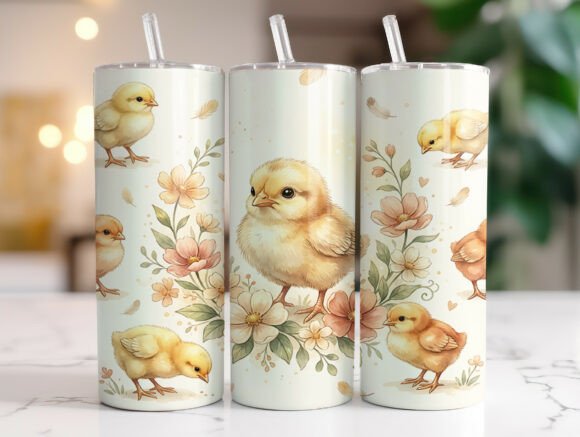
The product description highlights an INSTANT DOWNLOAD containing no physical products, which is standard for our industry. You receive a digital file package including one straight PNG and one tapered PNG, both at a high resolution of 300 DPI with dimensions of 9.3″ x 8.2″. For an embroidery professional, these specs immediately trigger a mental checklist regarding scalability, detail retention, and fabric compatibility.
First Impressions: Mood and Visual Personality
Upon opening the file, the first thing that strikes me is the clarity of the imagery. At 300 DPI, the lines are crisp, which is essential when translating a sublimation graphic into a stitch plan. The theme evokes a fresh, rejuvenating mood perfect for the transition from winter to spring. The layout features avian motifs that feel organic rather than rigid, suggesting a design that would flow beautifully on curved surfaces or soft textiles.
For those of us creating handmade products, the visual personality of a design dictates its market fit. This particular graphic feels boutique-ready. It lacks the cluttered, overly busy nature of cheap clip art, offering instead a clean aesthetic that suggests quality. When I imagine this converted into a machine embroidery design, I see potential for a mix of satin stitch outlines for the bird silhouettes and fill stitch techniques for the body details, provided the original vector data supports such translation.
Real-World Application: From Screen to Stitch
Let's move beyond theory and discuss a real-life scenario. Imagine a client approaches your craft business requesting a set of custom aprons for a spring-themed baking workshop. They want something cheerful but sophisticated. The Spring Birds 20oz Tumbler Sublimation graphic serves as an excellent reference or base layer for this project.
If you are using this strictly as a printed transfer, the 9.3″ x 8.2″ size is generous enough to cover a significant portion of a tote bag or the front of a sweatshirt. However, if you are digitizing this into an embroidery file for a sweatshirt embroidery project, the scale becomes crucial. A design of this magnitude needs to be broken down. You might isolate a single bird motif for a left-chest logo on a cap or use the full composition for a large back patch on a denim jacket.
For Etsy sellers specializing in nursery decor, this design could be adapted for a pillow cover. The soft themes align perfectly with baby items. However, one must consider the stitch density. If the original graphic has dense shading, converting it directly to thread could result in a stiff, cardboard-like texture on a baby embroidery item. A skilled digitizer would reduce the density, perhaps utilizing running stitch for delicate details to maintain the softness required for infant skin.
Navigating Technical Challenges
While the potential is high, there are areas where caution is necessary. The listing specifies this is a printable PNG, not a native embroidery format like PES or DST. This distinction is vital. You cannot simply load this into your machine. It requires manual digitization or tracing software to convert the pixels into stitch commands.
When working with textured fabrics, such as a waffle-knit kitchen towel or a thick terrycloth apron, the fine details of the birds might get lost if the stabilizer isn't chosen correctly. A cut-away stabilizer would be my recommendation for garments that need frequent washing, ensuring the finished product retains its shape over time. Conversely, for a one-off holiday gift like a decorative wall hanging, a tear-away might suffice.
Another consideration is the background. Since this is a raster image (PNG), placing it on dark fabric for printing requires a white underbase or a specialized transfer paper. For embroidery, you must manually select thread colors that contrast well against the garment. If you attempt to stitch this on a black hoodie without adjusting the color palette, the darker shades of the birds will vanish. Always test your thread chart against the fabric swatch first.
Small Hoop Sizes and Curved Surfaces
The dimensions of 9.3″ x 8.2″ mean this design will not fit into a standard 4x4 hoop. If you are working on a cap or a small embroidered patch, you will need to resize the artwork significantly. Be wary of shrinking it too much; tiny lettering or minute feather details can become a tangled mess of thread if the scale is reduced beyond the capability of your needle size. For curved surfaces like hats, the tapering effect mentioned in the product description (the tapered PNG) is a smart inclusion for sublimation, but for embroidery, you must account for the curvature of the cap frame during the digitizing phase to prevent puckering.
Enhancing Brand Value and Customer Trust
In the world of commercial embroidery, consistency is key. Using high-quality source material like the Spring Birds 20oz Tumbler Sublimation file elevates the perceived value of your small shop product. Customers can tell the difference between a pixelated, poorly executed design and one that is sharp and well-thought-out. By taking the time to properly adapt this graphic, you signal professionalism.
This attention to detail builds buyer engagement. Whether you are selling custom apparel or personalized gifts, the final presentation matters. A clean, vibrant bird motif on a tote bag tells a story of care and craftsmanship. It transforms a simple utility item into a piece of art that the recipient wants to display proudly.
Practical Notes for the Studio
Before committing to a production run, I always advise fellow designers to follow a strict protocol:
- Test on Scrap Fabric: Never stitch a new design on the final garment first. Use a scrap piece of the same material to check tension and registration.
- Check Licensing: The product states it is a digital file for instant download. Verify if the license allows for commercial use of the finished product. Some artists allow you to sell the physical item but prohibit reselling the digital file itself.
- Mockup Verification: Create black and white mockups to ensure the contrast holds up without relying on color. This helps identify areas that might merge together when stitched.
- Stabilizer Selection: Match your stabilizer to the fabric weight. Heavy designs need robust support to prevent sagging.
- Thread Contrast: Ensure your selected thread colors pop against the garment. Sometimes, adding a subtle outline stitch can define edges that might otherwise blur.
In conclusion, the Spring Birds 20oz Tumbler Sublimation offers a solid foundation for creative entrepreneurs. While it arrives as a graphic intended for sublimation, its high resolution and thoughtful composition make it a versatile candidate for adaptation into premium embroidery projects. With careful digitizing and an understanding of fabric dynamics, this design can become a standout element in your portfolio, delighting customers with its seasonal charm and professional finish.