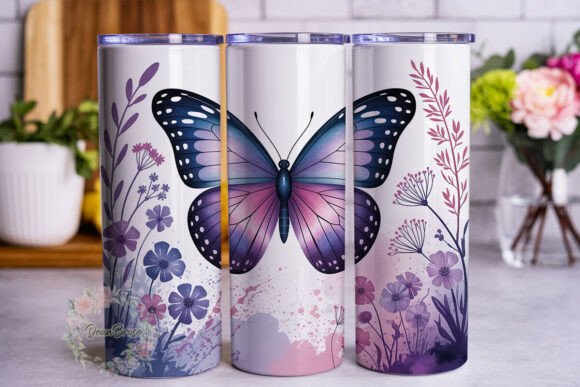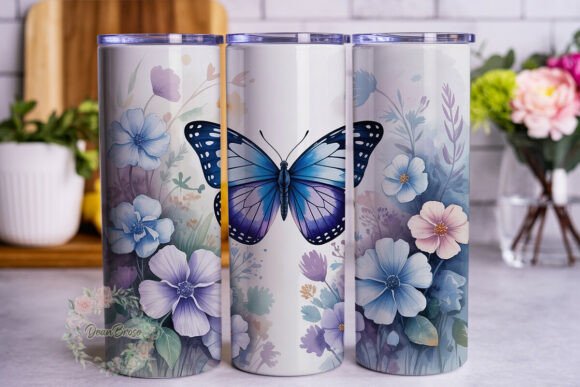
Review: Watercolor Butterfly Floral Tumbler Wrap for Crafters
As a designer who spends more time staring at stitch maps than most people care to admit, I approach every new digital embroidery file with a mix of excitement and skepticism. We have all been there: you buy a beautiful graphic, convert it, and realize the density is so high it turns your fabric into cardboard, or the details are so fine they vanish under the thread. Today, I am looking closely at the Watercolor Butterfly Floral Tumbler Wrap. While this product is marketed primarily as a sublimation or print asset for Tumbler Wraps, my interest lies in its potential adaptation for physical textile projects. Can a high-resolution graphic meant for printing translate into a stunning machine embroidery design for a boutique shop? Let's dig into the practical reality of using this asset.
First Impressions: Mood and Visual Personality
The moment you open the files, the first thing that strikes you is the resolution. At 300 DPI with dimensions of 9.3″ x 8.2″, the clarity is exceptional. The "watercolor" aesthetic implies soft edges, blending colors, and a dreamy, organic feel. For an embroiderer, this presents both a challenge and an opportunity. Unlike vector line art which demands sharp satin columns, a watercolor style begs for creative fill stitch work and perhaps some artistic running stitch outlines to mimic brush strokes.
The theme is undeniably spring-like and feminine, featuring butterflies nestled among floral elements. This isn't a bold, blocky logo; it is a scene. It creates a mood of gentle elegance, making it perfect for products that need to feel personal and handmade rather than mass-produced. If you are running a craft business focused on nursery decor, bridal gifts, or spring collections, this visual personality hits the right notes immediately. However, because it is sold as a PNG Graphics file, remember that you are not getting a pre-digitized stitch file. You are getting the artwork, which means the responsibility of translating those watercolor blends into thread colors falls entirely on your shoulders.
Real-World Application: From Screen to Stitch
Let's imagine a real scenario. A client approaches your small shop product line requesting a custom tote bag for a garden party favor. They want something unique, not just a printed name. This is where the Watercolor Butterfly Floral Tumbler Wrap shines as a source asset. Because the image is large and high-definition, you can isolate the butterfly or a specific flower cluster to create a bespoke embroidered patch or a direct-to-garment embroidery setup.
For sweatshirt embroidery, the soft nature of the design works beautifully on fleece or French terry. The lack of harsh geometric lines means the design can breathe with the fabric texture. If you were to adapt this for baby embroidery, perhaps on a onesie or a receiving blanket, the gentle curves of the wings and petals are safe and visually soothing. I can easily see this being digitized into an applique design, where the watercolor shapes are cut from fabric and stitched down, giving a textured, layered look that mimics the original art style without requiring thousands of color changes.
However, we must be realistic about the transition from a tumbler wrap to a textile project. A tumbler is a smooth, hard surface; fabric moves, stretches, and has pile. When planning your embroidery project, consider how the 9.3-inch width will scale down. On a cap or a pocket, you might only use 30% of the original image. In these cases, the intricate details of the watercolor wash might get lost if not simplified during the digitizing phase.
Navigating Technical Challenges
There are specific situations where you need to exercise caution with a design of this complexity. First, consider stitch density. Watercolor effects often rely on subtle gradients. If you try to replicate every shade change with thread, you will end up with a stiff, heavy patch that pulls on the garment. My advice is to simplify the color palette. Choose 4-6 dominant thread colors that capture the essence of the image rather than trying to match every pixel.
Fabric choice is critical. On dark fabric, this light, airy design might struggle unless you plan for a white underlay or consider using it as an appliqué base. On stretchy fabric like jersey knits, the large coverage area of a full butterfly could cause distortion if the stabilizer isn't robust enough. Always test the design on scrap fabric first. Check how the stabilizer holds up against the weight of the stitches, especially if you decide to fill large areas.
Also, think about the hoop size. While the original graphic is large, your machine's hoop size might limit how much of the design you can stitch at once. If you are aiming for a large back-piece on a jacket, ensure your machine can handle the span, or be prepared to split the design and re-hoop, which requires precise alignment to maintain the fluid look of the watercolor style.
Value Proposition for Sellers and Makers
Why go through the trouble of adapting a PNG instead of buying a ready-made stitch file? The answer lies in exclusivity and brand consistency. As an Etsy seller or creative entrepreneur, using a unique graphic allows you to create a finished product that no one else has. Everyone can buy the same standard butterfly embroidery file from a discount bin. By taking this high-quality Watercolor Butterfly Floral Tumbler Wrap and digitizing it yourself (or hiring a digitizer to interpret it specifically for your needs), you create a signature look.
This approach boosts customer trust. When a buyer sees a cohesive, thoughtfully designed item—whether it's a holiday embroidery gift or a piece of custom apparel—they recognize the effort. It elevates the perceived value of your handmade product. Furthermore, having the high-res PNG allows you to create professional printable mockup images for your online store before you even stitch a single thread. You can show customers exactly how the design will look on a tote, a pillow cover, or a tea towel, enhancing buyer engagement.
Practical Designer Notes for Success
Before you commit this design to a client's heirloom quilt or a batch of merchandise, keep these practical steps in mind:
- Check Licensing: Even though you are buying the file, confirm the license terms regarding commercial use for physical goods versus digital resale. Usually, purchasing a graphic allows you to sell finished physical items, but double-check to protect your craft business.
- Thread Contrast: Review the image in black and white on your screen. This helps you see if the values (light vs. dark) are distinct enough to read well when stitched. If it looks like a gray blob in grayscale, you may need to adjust the contrast or simplify the shapes.
- Test Small Details: The tips of the butterfly wings and the centers of the flowers are delicate. Ensure your digitizing settings don't make these areas too dense, which can cause thread breaks, or too sparse, which leaves gaps.
- Fabric Texture: Remember that thread sits on top of fabric. A watercolor look relies on blending, but thread is solid. Use blending techniques like long-and-short stitch or varied densities to mimic the soft fade of the original art.
- Washability: If this is for a tote bag design or kitchen towel that will be washed frequently, ensure the edges are well-tacked down and the thread quality is high to prevent fraying or fading.
In conclusion, the Watercolor Butterfly Floral Tumbler Wrap is a versatile and high-quality asset. While it is labeled for tumblers, its true potential for an experienced embroiderer lies in its adaptability. With careful digitizing and thoughtful material selection, it can become the centerpiece of a stunning personalized gift or a standout item in your boutique collection. It rewards the maker who understands that great embroidery is not just about following a file, but about interpreting art for a new medium.