Chicken Farm Bow Pattern Tumbler Wrap: A Designer's Review
As a designer who spends more time staring at stitch maps and fabric swatches than most people care to admit, I approach every new machine embroidery design with a mix of excitement and skepticism. We have all been there: you buy a cute graphic online, load it up, and realize halfway through the stitching that the density is too high for the fabric or the details are lost in the thread bulk. So, when I came across the Chicken Farm Bow Pattern Tumbler Wrap, I didn't just look at the preview image; I looked at it through the lens of practical application. While the product listing categorizes this under Tumbler Wraps and Graphics as a high-resolution printable PNG, my mind immediately went to how this aesthetic translates into the tactile world of embroidery project planning and execution.
First Impressions and Visual Personality
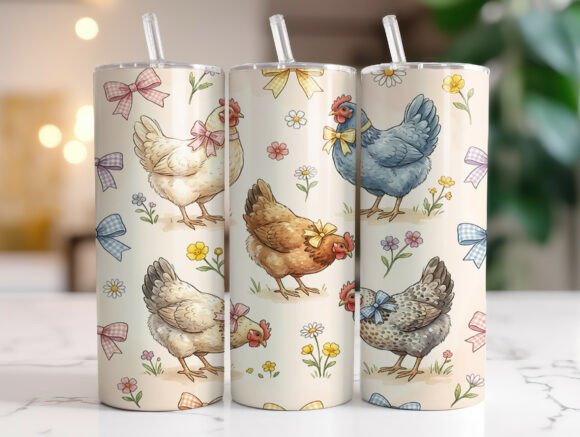
The first thing that strikes me about the Chicken Farm Bow Pattern Tumbler Wrap is its charming, rustic mood. The composition feels balanced, combining the whimsical nature of farm life with the structured elegance of a bow pattern. In the digital file, which boasts a 300 DPI resolution at 9.3″ x 8.2″, the lines appear crisp. For an embroidery designer, this visual clarity is crucial. It suggests that if this were digitized into an embroidery file, the separation between elements would be clean. The theme naturally leans toward spring decor, kitchen textiles, or boutique baby items. It has a "handmade" soul that resonates well with current market trends where customers are seeking authenticity over mass-produced perfection.
However, since this is technically a printable graphic intended for sublimation or printing on tumblers, using it as a reference for embroidery requires some translation. If you are an Etsy seller looking to expand from printed goods to stitched goods, this design serves as an excellent mood board or template. You could use the PNG as a base to trace and digitize your own applique design or convert the solid areas into fill stitch regions while outlining the finer details with satin stitch or running stitch.
Real-World Application Scenarios
Let's talk about a real case scenario. Imagine a client approaches your craft business requesting a set of personalized kitchen towels for a housewarming gift. They love the farmhouse aesthetic but want something more textured than a print. This is where the visual language of the Chicken Farm Bow Pattern Tumbler Wrap shines. By adapting this layout onto a linen tea towel, you create a finished product that feels substantial and valuable.
Alternatively, consider the booming market for custom apparel. A oversized sweatshirt featuring this chicken and bow motif, perhaps placed slightly off-center on the chest or large on the back, would appeal to the "cozy cottagecore" demographic. For baby embroidery, the soft curves of the bow and the friendly nature of the chicken make it perfect for a bib or a nursery pillow cover. The key here is versatility. Whether you are making an embroidered patch to sell at a craft fair or branding merchandise for a local farm stand, the core imagery holds up well across different scales.
For those who primarily sell digital assets, this PNG can be used to create stunning printable mockup previews. You can superimpose this graphic onto photos of embroidered hats or totes to show potential clients what a custom digitized version might look like, effectively bridging the gap between digital design assets and physical handmade product offerings.
Technical Considerations for Stitching
While the source file is a graphic, translating this style into thread requires careful attention to technical details. If you decide to digitize this look or use a similar embroidery file, you must consider stitch density. Farm-themed designs often include small details like feathers or ribbon folds. On a textured fabric like a waffle weave towel or a thick terry cloth, these tiny elements can get swallowed up if the stitch count is too low or the pull is too tight.
You also need to be mindful of the hoop size. At roughly 9 inches wide, this design is quite large. It will not fit in a standard 4x4 hoop. You would need a machine capable of handling at least a 5x7 or 6x10 area, or be prepared to split the design for re-hooping, which introduces alignment risks. When working on stretchy fabric like a t-shirt or a cap, the stability of the design is paramount. A design with large filled areas, like the body of a chicken or a solid bow, can cause puckering if the stabilizer isn't robust enough. I always recommend testing on scrap fabric first, especially if you are attempting this on dark fabrics where you might need an underlay to prevent the background from showing through the thread colors.
Another critical factor is the fabric texture. This design works beautifully on smooth cottons or canvas, but on a fuzzy fleece hoodie, the fine lines of the bow pattern might lose definition. In such cases, simplifying the digitizing strategy—perhaps using a bold satin stitch border instead of intricate fills—can save the embroidery project from looking muddy.
Enhancing Brand Value and Customer Trust
In the world of small shop product sales, presentation is everything. Using a cohesive theme like the one found in the Chicken Farm Bow Pattern Tumbler Wrap helps build brand recognition. If your shop specializes in rustic, farm-inspired goods, consistently using this type of imagery across your tote bag design collections, holiday embroidery specials, and personalized gift options creates a professional narrative. Customers trust sellers who demonstrate a clear artistic vision.
Furthermore, the quality of the source graphic matters. A high-resolution 300 DPI file ensures that if you are creating marketing materials or printing transfer papers to accompany your embroidered items, the visuals remain sharp. Blurry graphics on a website or social media post can subtly erode confidence in your commercial embroidery skills. By starting with a crisp asset, you ensure that your buyer engagement remains high.
Practical Notes for Designers
Before you commit to producing a run of items based on this aesthetic, keep these practical tips in mind:
- Verify Licensing: Since this is sold as a digital graphic for printing, double-check the license terms before digitizing it for embroidery sales. Some creators allow personal use only, while others permit commercial adaptation.
- Test Color Contrast: Farm themes often use earth tones. Ensure your thread colors have enough contrast against your chosen fabric so the design doesn't disappear.
- Check Detail Clarity: If digitizing, zoom in on the smallest parts of the bow and chicken. Can they be stitched at 1mm width? If not, simplify them.
- Mockup Testing: Create black and white mockups to see if the design relies too heavily on color for definition. Good embroidery should read well even in monochrome.
- Stabilizer Selection: For larger designs like this (9.3″ wide), use a cut-away stabilizer for knit fabrics to prevent long-term distortion.
Ultimately, the Chicken Farm Bow Pattern Tumbler Wrap offers a delightful foundation for creative expansion. Whether you are sticking to sublimation for tumblers or branching out into sweatshirt embroidery and home decor, the charm of the design is undeniable. It invites the maker to slow down, consider the materials, and produce something that feels genuinely crafted. For the creative entrepreneur, it represents not just a file to download, but a starting point for a profitable and aesthetically pleasing product line.